Endodontics commonly involves the procedure known as root canal treatment. Root canal treatment is the removal of the tooth’s nerves in the event they become inflamed or infected, which can happen due to deep decay or an extensive restoration. There are numerous reasons to need Root canal treatment, such as a cracked or fractured tooth, excessive wear of enamel or dentine leading to exposure of the nerves, extensive restoration that involves the pulp, or as a result of severe gum disease.
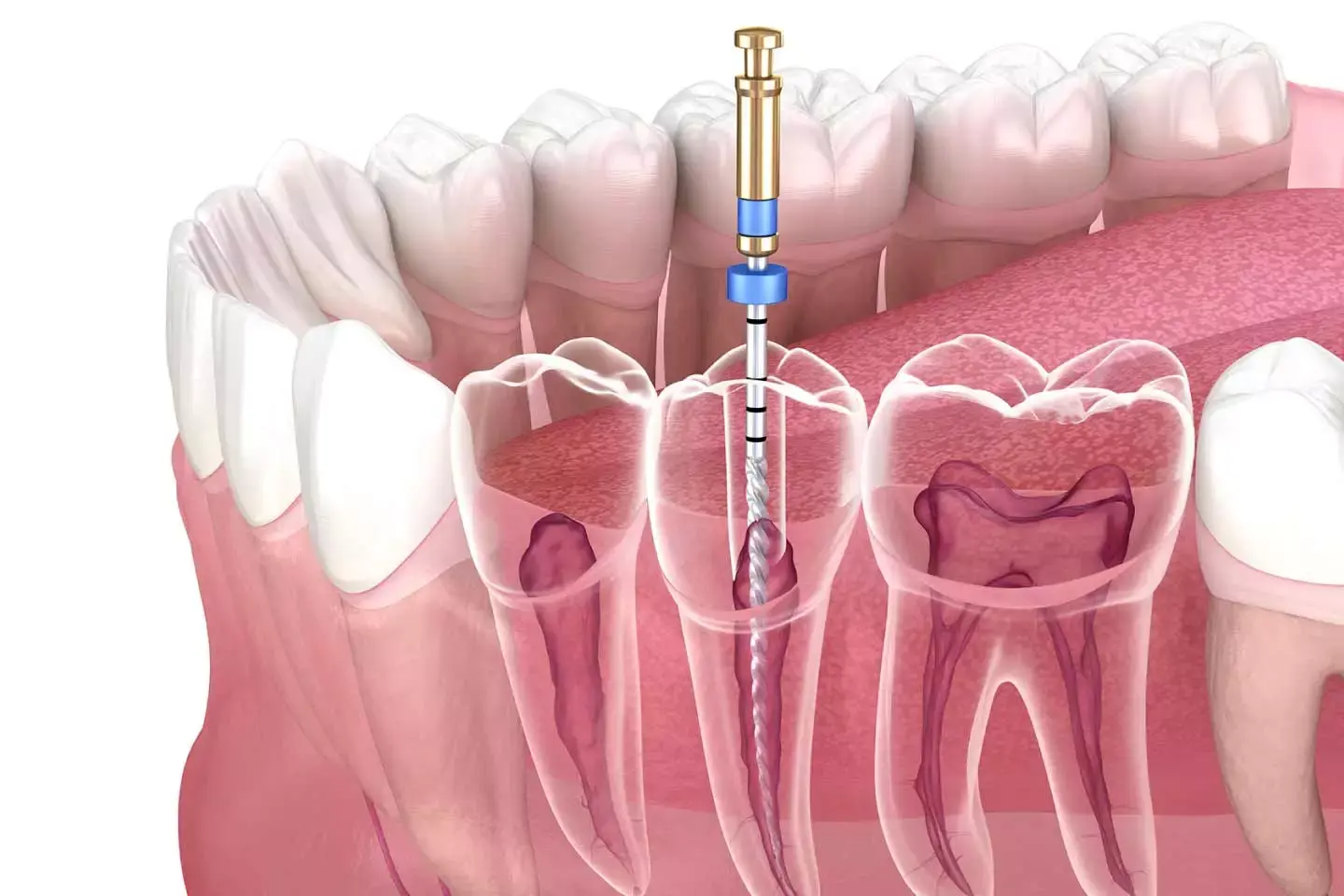
A tooth is made up of hard, white enamel and a thicker dentine layer; both layers protect the innermost soft tissues of the tooth called the pulp. The dental pulp contains blood vessels and nerves that extend from the crown to the tips of the root or roots. Root canal treatment is the removal of the pulp tissues from the tooth due to infection or inflammation.
Signs of pulp damage may include pain, prolonged sensitivity to heat or cold, discoloration of the tooth, swelling, tenderness of the overlying gums, or a bad taste in the mouth. However, in some instances, there are no symptoms at all. If pulp inflammation or infection is left untreated, it can cause pain, swelling, and loss of the supporting bone.
What Are The Advantages Of Treatment?
Root canal treatment saves teeth that would otherwise need to be extracted. After root canal treatment, the tooth is pulp-less, i.e., it has no vital tissues within.
However, there are vital tissues surrounding the root (e.g, the gum, periodontal membrane, and supporting bone), making root canal treatment imperative for dental health. A root-canal-treated tooth can function normally and can be maintained with routine dental care and oral hygiene measures.
How Is Treatment Carried Out?
Removal of the infected or inflamed pulp is the first step in saving the tooth. Under local anesthetic, an opening is made in the crown of the tooth to get access to the infected or inflamed pulp within.
Using small, specially designed hand or rotary files, the root canals are cleaned and shaped to a form that can be sealed. Debris within the canals is removed by flushing with an anti-bacterial solution.
The canals are finally filled with a permanent sealant material. The tooth should be restored to full shape and function by either a permanent filling or a crown, depending on how much of the tooth is left. This should be done as soon as possible, as there could be a risk of tooth fracture due to biting forces.
All root canal treatment procedures are performed by isolating the tooth with a rubber dam to provide a clean and saliva-free environment. Root canal treatment may be done in single or multiple visits, depending on the complexity of the tooth.
Often, X-rays are taken to determine the length of the root and to monitor the various treatment stages.
Is Root Canal Treatment Painful?
Root canal treatment procedures are relatively comfortable and often painless as the tooth is anesthetized during treatment. After treatment, the tooth may be sensitive or tender for a few days due to inflammation of the surrounding tissues. This discomfort can be relieved by taking painkillers available over the counter at the pharmacy. However, if the pain persists and is severe, or a swelling occurs, you should contact your dentist.
Aftercare For Your Root-Treated Tooth
As far as possible, avoid chewing or biting on the tooth being treated until you have it permanently restored with either a filling or a crown. Excessive pressure at this stage may crack or fracture the tooth. Therefore, it is very important to restore the tooth properly as soon as possible. Most endodontically treated teeth last as long as natural teeth following permanent restoration.
Practice good oral hygiene, including brushing and flossing at all times, as root-filled teeth are as prone to decay as natural teeth. It is also important to have your treated tooth reviewed regularly by your dentist.
What is endodontic treatment?
Endodontic treatment, commonly known as a root canal, is a dental procedure that removes infection from the inside of a tooth. It helps save a damaged or decayed tooth by cleaning and sealing the root canal system, allowing you to keep your natural tooth instead of needing an extraction.
How do I know if I need a root canal?
You may need endodontic treatment if you have severe tooth pain, sensitivity to hot or cold, swelling around the gums, or discomfort when chewing. However, only a dental examination and X-ray at Paulton Dental can confirm if a root canal is necessary.
Is a root canal painful?
Modern root canal treatments are virtually painless thanks to advanced techniques and local anaesthetic. Most patients feel only mild soreness afterward, similar to what you might experience after a filling. Our team ensures you’re comfortable throughout your visit.
How long does endodontic treatment take?
Most root canal treatments can be completed in one or two visits, depending on the tooth and the level of infection. After the procedure, your dentist may recommend a crown to restore strength and protect the treated tooth.
How long will a tooth last after a root canal?
With proper care and regular check-ups, a tooth that has received endodontic treatment can last many years, often a lifetime. Maintaining good oral hygiene and avoiding chewing hard foods on the treated tooth will help prolong its lifespan.
Get in Touch
Let’s Create the Smile You Deserve.
Book your smile consultation today and take the first step toward a confident, healthy smile.
Hear From Our Happy Patients



The Dentist was very helpful as he talked me through the procedure at every stage. His bedside manner was gentle and kind.
He also made recommendations that I appreciated, so I hope I see him again at my next appointment.


Dentist explained everything he was doing and felt very safe and comfortable
Dental Insights & Tips
Explore our blog for expert advice, treatment
insights and oral care tips.

Composite Bonding vs Veneers for Chipped or Gappy Teeth
Compare composite bonding and veneers to choose the best solution for chips and gaps.

Root Canal Myths: Pain & Duration
Separate facts from fiction about root canal pain, procedure time, and modern treatment comfort.

Are Dental Implants Worth the Cost?
Explore the benefits, longevity, and value to decide if dental implants are worth the cost.