
.webp)

CBCT vs OPG for Dental Implants: Which Scan Do You Need?
CBCT vs OPG for dental implants explained. Learn which scan you need, why 3D imaging matters, and how Paulton Dental & Implant Centre plans safer implants.
If you are thinking about getting dental implants, you have probably already done a bit of research. You may have come across terms like OPG and CBCT scans and wondered which one you actually need.
In most dental implant cases, a CBCT scan is recommended because it provides a detailed 3D view of your jawbone, helping dentists plan treatment safely and accurately. However, not every patient requires one.
In this guide, we explain the difference between CBCT and OPG scans, when each is used, and how your dentist decides which is right for you.
CBCT vs OPG: Key Differences
Type of Image
- OPG: 2D (flat image)
- CBCT: 3D (detailed, multi-angle view)
Purpose
- OPG: General dental overview and screening
- CBCT: Detailed planning for dental implants
Accuracy
- OPG: Moderate accuracy
- CBCT: High precision for measurements
Bone Assessment
- OPG: Cannot show bone depth or thickness
- CBCT: Shows bone width, depth, and density clearly
Suitability for Dental Implants
- OPG: Limited use
- CBCT: Strongly recommended in most cases
What Is an OPG Scan?
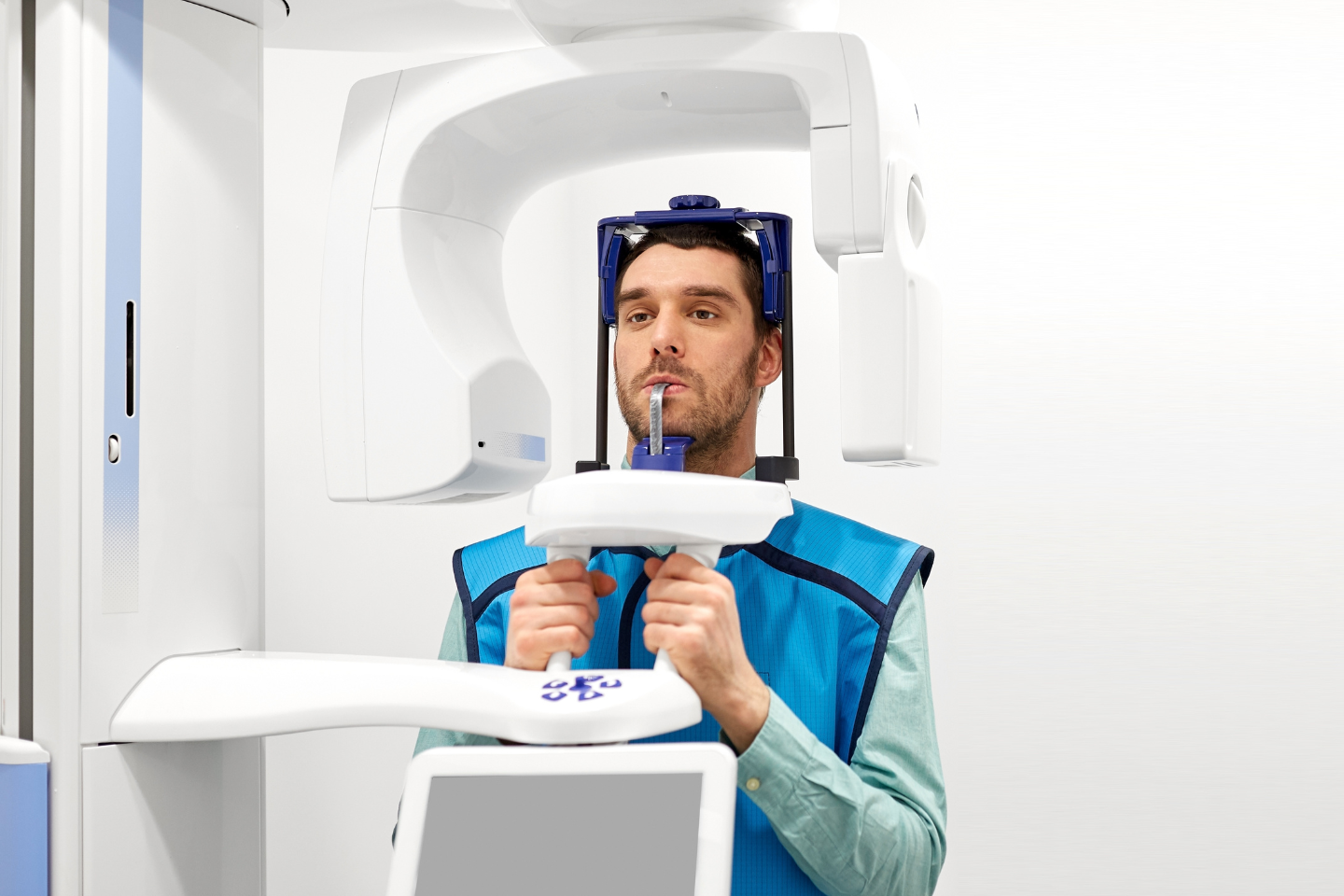
OPG stands for Orthopantomogram. If you have ever stood in a machine that moves around your head while you bite down on a small plastic piece, you have had an OPG.
A Wide View of Your Mouth
An OPG gives a wide, flat image of your teeth, jaw, and surrounding structures. It is useful for general dental assessments and identifying issues like decay, infections, or wisdom teeth problems.
Why It May Not Be Enough for Dental Implants
The limitation of an OPG is that it is two-dimensional. While it shows height, it does not show depth.
For dental implants, your dentist needs to measure:
- Bone width
- Bone density
- Exact implant position
An OPG cannot provide this level of detail, which is why it is often not sufficient for implant planning.
What Is a CBCT Scan?
CBCT (Cone Beam Computed Tomography) is an advanced imaging technology used in modern dentistry.
3D Imaging for Precision
Unlike an OPG, a CBCT scan creates a three-dimensional image of your jaw. It allows your dentist to examine your mouth from every angle.
This helps identify:
- Bone thickness and density
- Nerve locations
- Sinus position
Accurate Implant Planning
With CBCT imaging, your dentist can plan the exact position, angle, and size of the implant before the procedure even begins. This significantly improves accuracy and reduces risks.
Why CBCT Is Preferred for Dental Implants
For most implant treatments, CBCT scans are considered the gold standard.
They allow for:
- Precise placement of implants
- Reduced risk of nerve damage
- Better long-term success rates
- More predictable outcomes
This is why many implant dentists recommend CBCT scans before surgery.
Do You Always Need a CBCT Scan Before Implants?
Not always—but in most cases, yes.
A CBCT scan is usually required when:
- Bone loss is suspected
- Implants are placed near nerves or sinuses
- Multiple or complex implants are planned
In simpler cases, your dentist may begin with an OPG, but a CBCT is often still needed before final placement.
When Might an OPG Scan Be Enough?
An OPG scan may be used:
- During initial consultation
- For general dental assessment
- To screen for obvious issues
However, it is rarely sufficient on its own for implant surgery planning.
What Happens If You Skip a CBCT Scan?
Skipping a CBCT scan can increase the risk of complications, such as:
- Incorrect implant placement
- Nerve damage
- Implant failure
In some cases, these complications can lead to pain or infection that may require treatment from an emergency dentist.
How Dentists Decide Which Scan You Need
Your dentist will recommend the most suitable scan based on:
- Your bone structure
- The complexity of treatment
- The location of the implant
The goal is always to ensure safety, accuracy, and long-term success.
Benefits of CBCT for Patients
Shorter Surgery Time
Pre-planned procedures mean quicker and more efficient treatment.
Faster Healing
Precise placement reduces trauma to surrounding tissues.
Peace of Mind
You can feel confident knowing your treatment is carefully planned using detailed imaging.
Frequently Asked Questions
Q. Is CBCT radiation safe?
Yes. CBCT uses low levels of radiation and is considered safe for dental use. It is significantly lower than a hospital CT scan.
Q. Does the scan hurt?
No. The scan is quick, painless, and usually takes around 20 seconds.
Q. Is CBCT more expensive than OPG?
Yes, but it provides far more detailed information, making it essential for safe implant placement.
Q. Can I use an existing X-ray?
Standard dental X-rays are usually not sufficient for implant planning, as they do not provide 3D detail.
The Final Verdict: CBCT vs OPG
For dental implants, CBCT scans are usually the preferred choice because they provide the detailed 3D information needed for safe and accurate placement.
While OPG scans are useful for general assessments, they are typically not enough on their own for implant treatment.
Ready to Start Your Implant Journey?
If you are considering dental implants, having the right imaging is the first step towards a safe and successful result.
A detailed assessment, including CBCT imaging when needed, helps ensure your treatment is planned with precision and care.
Book a consultation to find out which scan is right for you and take the next step towards restoring your smile.
Get in Touch
Let’s Create the Smile You Deserve.
Book your smile consultation today and take the first step towards a confident, healthy smile.