.webp)

Children
Provide gentle, friendly, and comprehensive dental care to help children develop healthy oral habits from an early age.
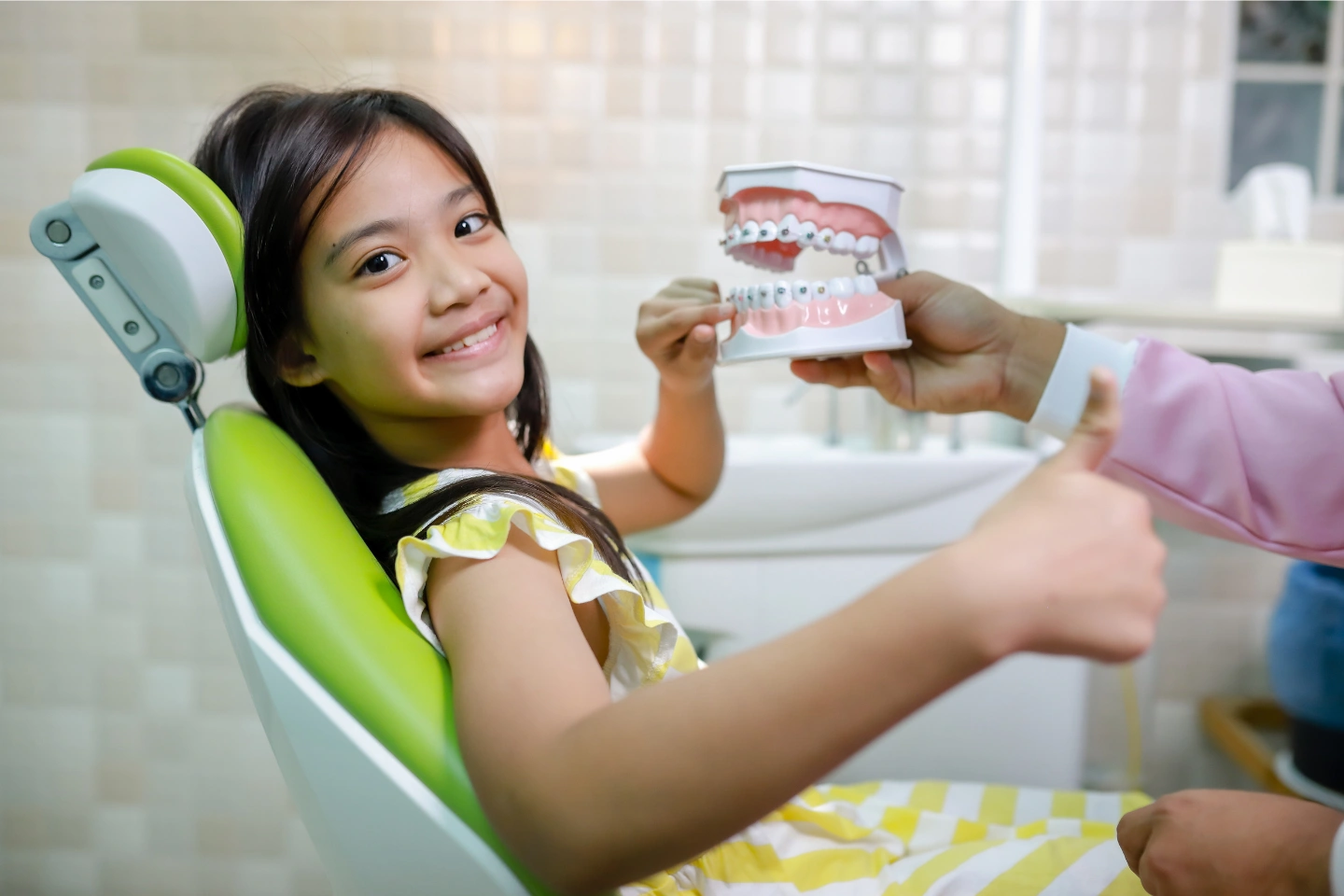
Paulton Dental & Implant Centre is a private practice; therefore, we do not provide dental treatment for children or adults through the NHS. We offer a monthly payment scheme for children's examinations, with up to 50% discounts on treatment that may be required. Children not on the scheme will be offered a 30% discount on the adult price list.
Benefits
Guidelines regarding the preventative care for children include:
- Fissure sealants can be offered once your child’s permanent back teeth have started to come through (usually at the age of about 6 or 7) to protect them against decay. This is where the chewing surfaces of the back teeth are covered with a special thin coating to keep germs and food particles out of the grooves. The sealant can last for as long as 10 years.
- Fluoride varnish can be applied to both baby teeth and adult teeth. For this, high levels of fluoride are applied onto the surface of the tooth to prevent decay, and we recommend this every 6 months; however, some children may need it more frequently. It works by strengthening tooth enamel, making it more resistant to decay.
- From the age of 3, children should be offered fluoride varnish application at least twice a year. Younger children may also be offered this treatment if your dentist thinks they need it.
Unless advised by the dentist, we don’t offer hygiene appointments to children as the above treatments are utilised in their place. Therefore, with our monthly plan, we provide all the necessary treatment required for children and send out recalls every 6 months for private patients.
When should I take my child to the dentist for the first time?
How can I prepare my child for their first dental visit?
How often should my child see the dentist?
What if my child is afraid of the dentist?
How can I protect my child’s teeth at home?
Get in Touch
Let’s Create the Smile You Deserve.
Book your smile consultation today and take the first step towards a confident, healthy smile.


Hear From Our Happy Patients

The Dentist was very helpful as he talked me through the procedure at every stage. His bedside manner was gentle and kind.
He also made recommendations that I appreciated, so I hope I see him again at my next appointment.
Dentist explained everything he was doing and felt very safe and comfortable
Dental Insights & Tips
Explore our blog for expert advice, treatment
insights and oral care tips.
.png)
How to Choose a Cosmetic Dentist in Somerset
Discover how to choose a cosmetic dentist in Somerset, including experience, technology, and treatment options for safe, effective smile enhancement.

Cosmetic Dentist in Paulton: What to Look For
Learn how to choose a cosmetic dentist based on expertise, technology, and treatment options to achieve safe, natural-looking smile results.

Cosmetic Dentist vs General Dentist: What’s the Difference?
Discover the difference between cosmetic and general dentists, their treatments, and which one to choose for your oral health and smile goals.